There's a version of this job where you do the minimum.
Copy some code from Stack Overflow. Make it work well enough to pass a quick test. Ship it. Move on.
Nobody would know. The client sees the frontend. They click the buttons. Everything loads. They're happy.
But I've never been able to work that way.
From the very first project I took on as a self-taught developer, I've had one rule: build it like it's going to production, because it is.
What "Production-Ready" Actually Means
It doesn't mean perfect. Perfect code doesn't exist.
It means:
The code is clean enough that another developer can read it without wanting to cry
Errors are handled properly — not just ignored
Sensitive data is protected — environment variables, hashed passwords, validated inputs
The app doesn't break when someone does something unexpected
It works on mobile, not just your laptop
It can handle real users, not just you testing it locally
That's the bar. Not perfect — but real.
Where This Habit Came From
Early in my career I built a project quickly and cut corners on input validation. I thought — who's going to try to break this?
Someone did.
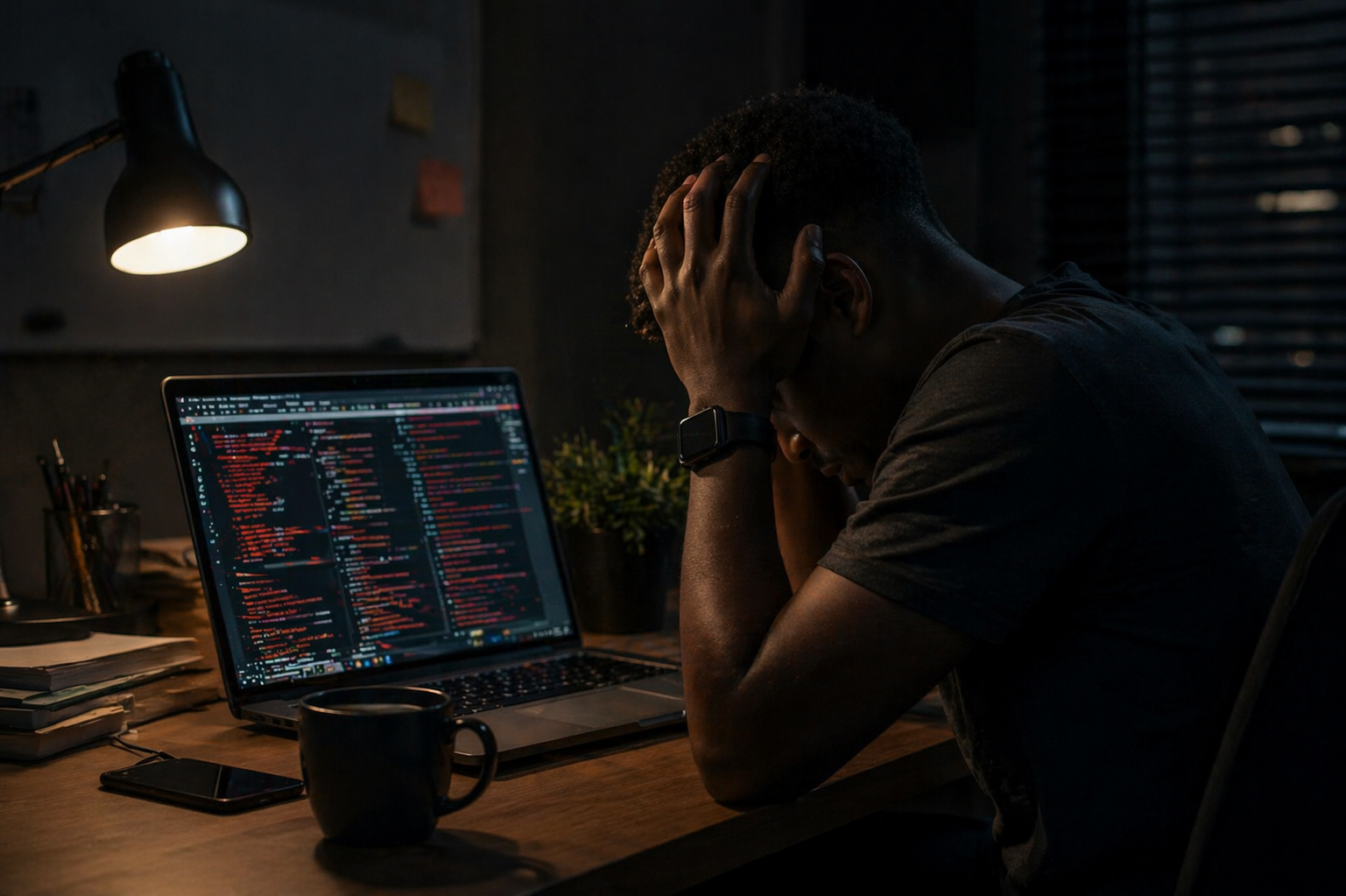
Not maliciously. A user just entered something unexpected in a form field and the whole thing crashed. The client called me. I had to fix it live while they waited.
That experience changed how I think about every line of code I write.
The Shortcuts That Always Come Back
Here are the shortcuts I see developers take — and why they always cost more later:
Hardcoding values instead of using environment variables
It works until you push to production and your API keys are exposed in a public GitHub repo. I've seen it happen to experienced developers. It's embarrassing and dangerous.
No error handling
Your happy path works. Great. But what happens when the database goes down? When an API times out? When a user uploads a 50MB file instead of a 5KB one?
If you haven't thought about it, your app crashes — in front of a real user.
No input validation
Users will enter anything. Empty fields. SQL injection attempts. Emojis in phone number fields. If you trust user input without validating it, you're building on sand.
No loading or error states on the frontend
The button gets clicked. Nothing happens for 3 seconds. No spinner. No feedback. The user clicks it again. Now you have duplicate requests. Now you have bugs that are nearly impossible to reproduce.
These aren't edge cases. These are Tuesday.
Why It Matters for Freelancers Especially
When you work in a company, there are code reviews. There are QA teams. There are multiple people catching what you miss.
As a freelancer, you are the entire team.
If something breaks in production at 2am, the client is calling you — not a QA engineer, not a senior developer. You.
The only way to protect yourself — and your reputation — is to build it right the first time.
A client who has a bad experience doesn't just leave. They tell people. In a market where word of mouth matters, one broken production app can undo months of good work.
The Other Side of This
Here's what nobody tells you about building things properly from the start:
It's actually faster.
Not immediately. Setting up proper error handling and validation takes more time upfront. But debugging a production issue at midnight, explaining to a client why their app is down, rewriting sloppy code three months later — that takes infinitely more time.
Clean, production-ready code is an investment. And it compounds.
What This Looks Like in Practice
On every project I build, before I consider it done:
All environment variables are in
.envfiles — never hardcodedEvery API route validates its inputs before touching the database
Authentication uses proper JWT with expiry and httpOnly cookies
Passwords are hashed — always
File uploads are validated for type and size
Error responses are consistent and meaningful
The UI handles loading, success, and error states
It's tested on mobile before delivery
The code is commented where the logic isn't obvious
None of this is extraordinary. It's just the standard I hold myself to on every project — whether it's a small landing page or a full banking platform.
The Clients This Attracts
Something interesting happens when you build this way consistently.
Clients notice. Not because they can read your code — most can't. But because the app works reliably. Because when they ask you to add a feature six months later, you can do it without having to rewrite everything. Because they never have to call you at midnight because something broke.
That reliability builds trust. Trust builds referrals. Referrals build a business.
I'm not competing on price. I'm competing on the fact that what I build works — and keeps working.
That's the standard I've set for myself. Not because someone told me to. Because I've seen what happens when you don't.
If you're looking for a developer who treats your project like it matters — because it does — let's talk.